

How to Source Industrial Tools and Construction Products From China: What Buyers Should Check
News originally published by
EIN Presswire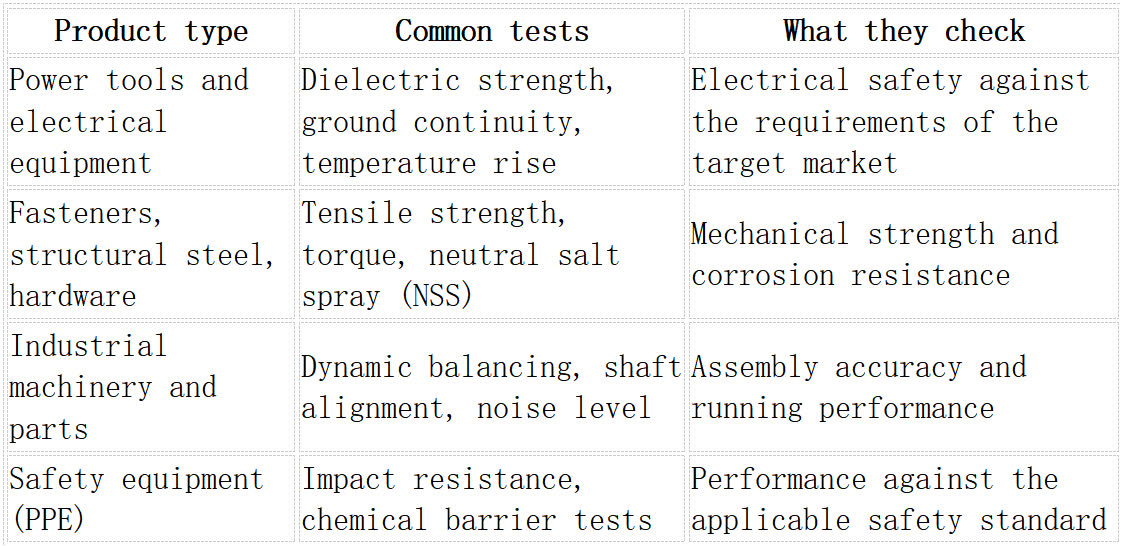


Short answer: When buying industrial tools, fasteners or construction hardware from China, price should not be the only criterion. Buyers should confirm the factory can hold the required tolerances, check that the material grade is what was ordered, verify certificates with the issuing laboratory, and inspect during production, not only at the end. Small deviations in these products can cause rework, delays or safety problems on site.
This guide shows what to check at each stage. It is general guidance. Which standards and certifications apply depends on your product and destination market, so confirm requirements for your own case.
What Makes Sourcing Industrial Tools and Construction Products From China Different From Consumer Goods?
Industrial and construction products work under load, vibration, weather and long daily use. A defect that looks minor on a retail item, such as a loose tolerance or a weaker steel grade, can matter much more in a fastener, a power tool or safety equipment.
Three things make these products harder to source:
Specifications are technical. Drawings, tolerances and material grades must be followed exactly.
Failures cost more. Problems found on site can mean delays, replacement and, in some cases, safety risks.
Market rules vary. Different countries and product types may require different standards, markings or test reports.
Importers who rely only on factory claims may also face customs problems or product liability questions in the destination market. Requirements differ by country, so check with your customs broker or a compliance specialist.
What Are the Most Common Quality Problems?
What Should Buyers Check Before Placing an Order?
Use this checklist:
Are the drawings, tolerances, material grades and surface treatments written down and agreed?
Has the factory shown it can make this type of part (CNC equipment, heat treatment, in-house testing)? A sample room is not the same as a production line.
Is the material grade backed by a test report, not just a stamp on the part?
Are the certificates real, current and for this exact product? Check with the issuing laboratory.
Will there be inspections during production, not only before shipping?
Are the tests for your product type defined in advance (see the table below)?
Has the HS code been confirmed with your customs broker?
How Is Each Product Category Tested?
Test methods and pass criteria depend on the standard you are working to, so agree them with the factory before production starts.
How Does Quality Control Work Across the Sourcing Process?
A practical process has four checkpoints:
Specification review before the contract. Check CAD files, material callouts, surface treatment and tolerances so that nothing is left unclear.
Factory capability check. Look at CNC precision, heat treatment equipment and lab instruments to see whether the factory can hold tolerances over a full order.
In-process inspection. Check dimensions, materials and assembly during production, while problems can still be fixed cheaply.
Final inspection before loading. Measure dimensions, test samples and check function and packing before the goods are shipped.
The earlier a problem is found, the cheaper it is to correct. Our guide on supply chain resilience strategies explains how to build checkpoints like these into the whole supply chain.
How Can Buyers Verify Certificates and Test Reports?
Do not stop at receiving a PDF. Ask:
Which laboratory issued the report, and is it accredited for this test?
Does the report cover the exact product and model you are buying, not a similar one?
Is the report current, and does the registration number check out with the lab?
Does the product on the production line match the product that was tested?
Contact the issuing laboratory directly where possible. If the product is safety-critical, consider independent testing of samples from your own production batch.
What About HS Codes and Duties?
The HS code decides the duty rate and may affect other import rules. Industrial hardware can be hard to classify, and an incorrect code may lead to duty differences or customs delays. The importer is responsible for the declaration, so confirm classification with your customs broker before shipping. A supplier or sourcing partner can supply product details to help with this, but should not replace that check.
How Can Sinolinkers Help With Industrial Sourcing?
Sinolinkers helps overseas buyers handle the full process in China: finding suppliers, production follow-up, quality control, compliance coordination and international shipping. For industrial and construction products, this can include:
Reviewing drawings and specifications before a factory is chosen
Factory audits covering CNC calibration records, mold maintenance and QC capability
Multi-stage QC, including in-process checks and pre-shipment testing
Support with product compliance documents, including checking reports with the issuing laboratory
Batch-level traceability, so material consistency can be followed from the first unit to the last
Shipping through Toncent Logistics
FAQ
Can a sourcing partner guarantee that my products pass customs?No. The importer is responsible for meeting the requirements of the destination market. A good partner reduces the risk by checking specifications, materials and documents before shipping.
Do I need third-party lab testing for every order?Not always. It is most useful for new products, new factories, safety-critical items and when material grade matters. Decide this with your compliance requirements in mind.
How do I know a factory can hold tight tolerances?Look at its machines, calibration records and inspection tools, and measure samples taken from the production line, not only from the sample room.
When should inspections happen?Ideally before production (materials), during production (in-process) and before shipping (final). Checking only at the end leaves little room to fix problems.
Planning an industrial or construction sourcing project in China? Visit sinolinkers.com to talk to the team.
sinolinkers
sinolinkers
Legal Disclaimer:
EIN Presswire provides this news content "as is" without warranty of any kind. We do not accept any responsibility or liability for the accuracy, content, images, videos, licenses, completeness, legality, or reliability of the information contained in this article. If you have any complaints or copyright issues related to this article, kindly contact the author above.
